
Sitemap
A list of all the posts and pages found on the site. For you robots out there, there is an XML version available for digesting as well.
Pages

Posts

ZFighting: An Interesting Experience of AI-Human Coding FPS Game
Published:
This post shares my experience of developing a FPS game using Gemini AI Studio and Cursor, showcasing the collaborative potential between AI and human in game creation.
publications
<div class=”list__item” data-publication-year=”2023” data-publication-type=”journal” data-publication-title=”bivariate joint analysis of injury severity of drivers in truck–car crashes accommodating multilayer unobserved heterogeneity” data-publication-authors=”dongdong song, xiaobao yang*, yitao yang, pengfei cui, guangyu zhu” data-publication-venue=”accident analysis & prevention”data-publication-method=”statistics method”data-publication-data=”california crash data”data-publication-objects=”crash severity analysis”>
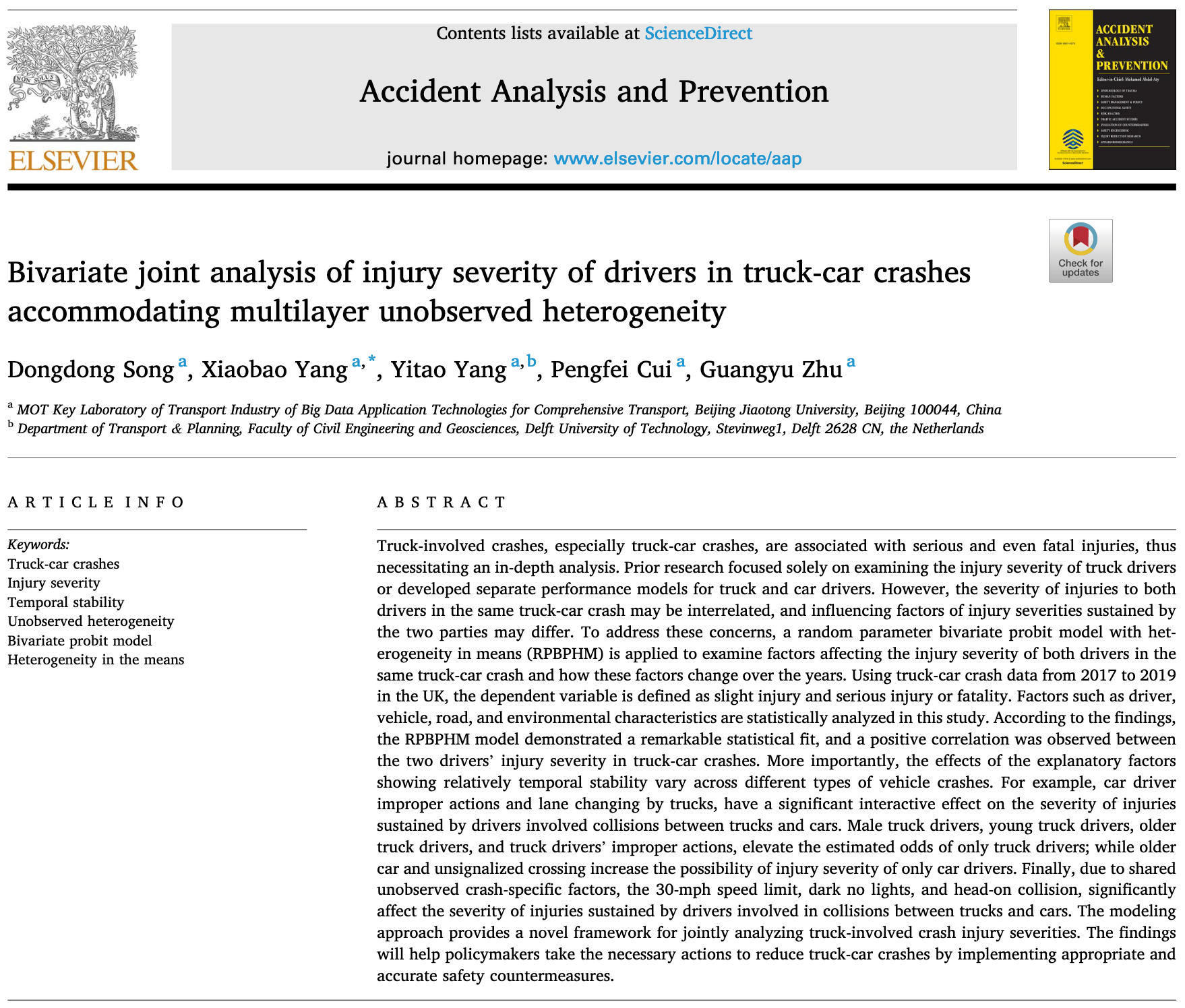
Bivariate Joint Analysis of Injury Severity of Drivers in Truck–Car Crashes Accommodating Multilayer Unobserved Heterogeneity
Published in Accident Analysis & Prevention, 2023
This study proposes an RPBPHM framework to jointly model truck- and car-driver injury severities in the same crash using UK STATS19 (2017–2019), quantifying cross-equation correlation while capturing multilayer unobserved heterogeneity and temporal stability/instability of contributing factors.
</div>
<div class=”list__item” data-publication-year=”2023” data-publication-type=”journal” data-publication-title=”modeling non-parametric effects of two-vehicle speed on crash risk at intersections: leveraging two-dimensional additive logistic regression beyond univariable approach” data-publication-authors=”pengfei cui, xiaobao yang*, lu ma, chaoxu mu” data-publication-venue=”journal of transportation safety & security”data-publication-method=”statistics method”data-publication-data=”us crss data”data-publication-objects=”crash severity analysis”>
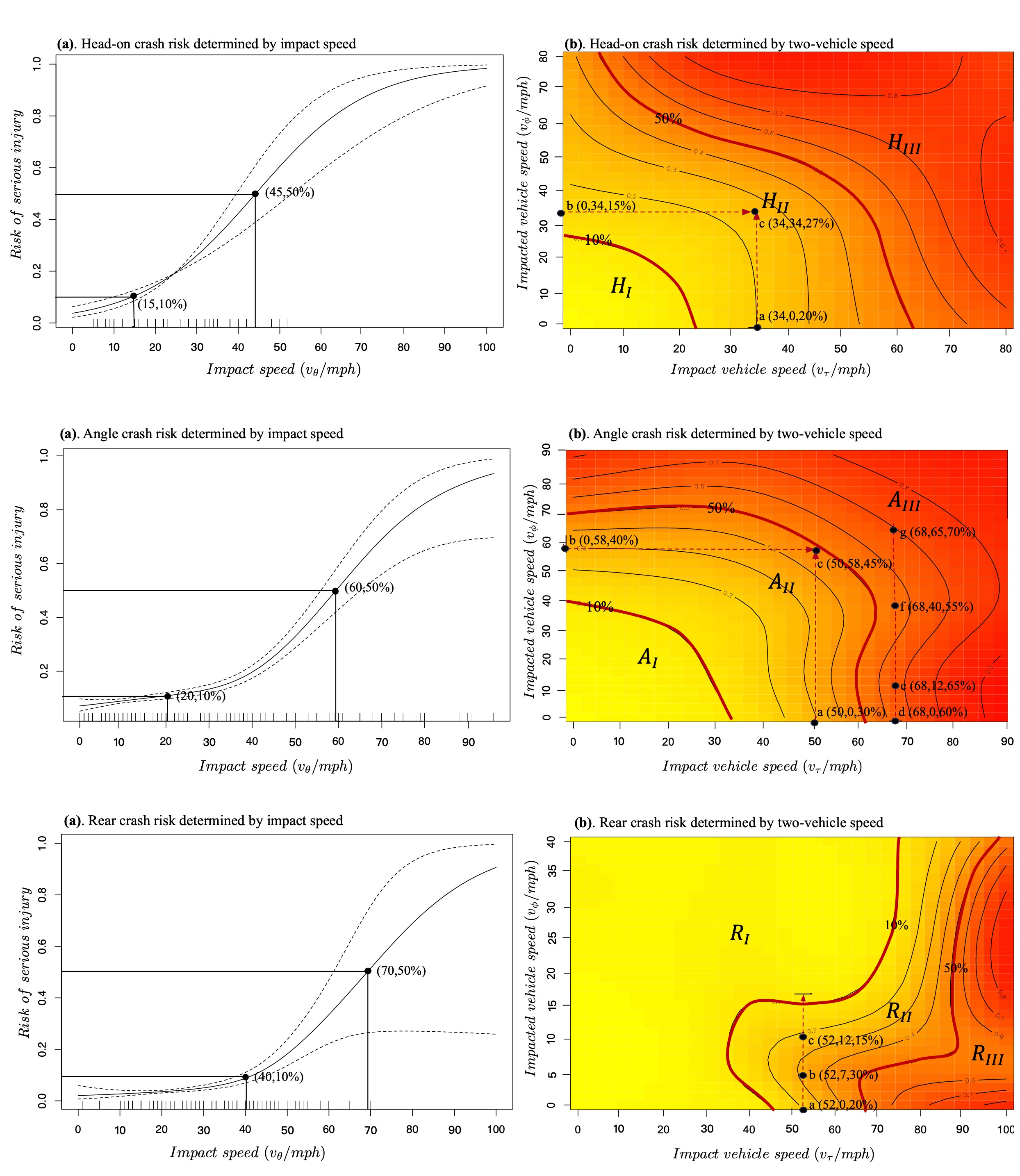
Modeling Non-Parametric Effects of Two-Vehicle Speed on Crash Risk at Intersections: Leveraging Two-Dimensional Additive Logistic Regression Beyond Univariable Approach
Published in Journal of Transportation Safety & Security, 2023
Using CRSS intersection crash data (2016–2018), this study models serious-injury risk as a two-dimensional, non-parametric function of two-vehicle speeds. The framework moves beyond conventional univariable impact-speed definitions, revealing crash-type-specific and non-monotonic speed–risk patterns that inform intersection safety interventions.
</div>
<div class=”list__item” data-publication-year=”2024” data-publication-type=”journal” data-publication-title=”advancing urban traffic accident forecasting through sparse spatio-temporal dynamic learning” data-publication-authors=”pengfei cui, xiaobao yang, mohamed abdel-aty, jinliang zhang, xuedong yan” data-publication-venue=”accident analysis & prevention”data-publication-method=”deep learning”data-publication-data=”nyc crash data”data-publication-objects=”crash frequency modeling”>
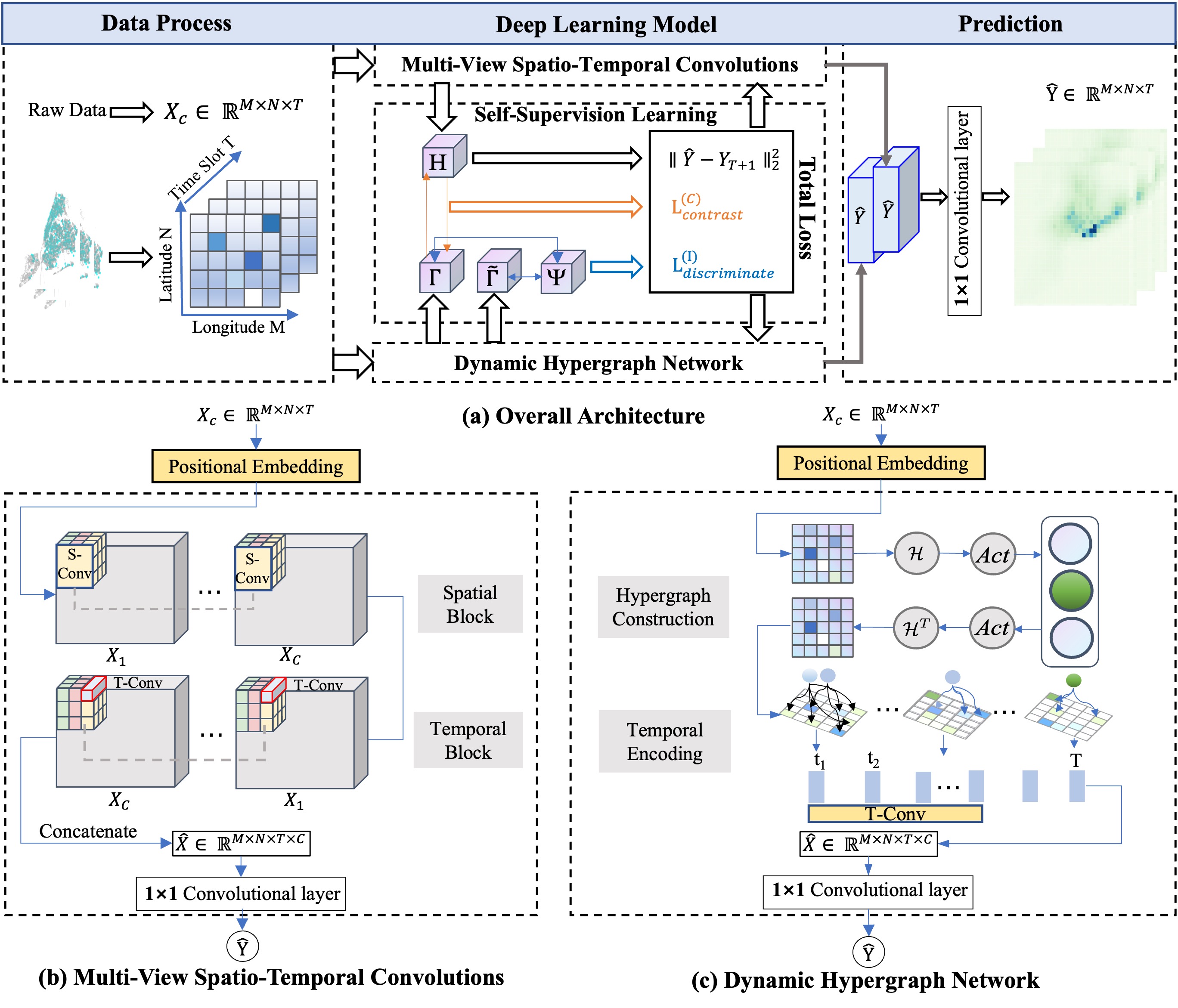
Advancing Urban Traffic Accident Forecasting through Sparse Spatio-Temporal Dynamic Learning
Published in Accident Analysis & Prevention, 2024
Proposes an SST-DHL framework that combines dynamic hypergraph learning with self-supervised representation learning to improve sparse, skewed urban traffic accident forecasting and enhance interpretability.
</div>
<div class=”list__item” data-publication-year=”2024” data-publication-type=”journal” data-publication-title=”effects of helmet usage on moped riders’ injury severity in moped–vehicle crashes: insights from partially temporal constrained random parameters bivariate probit models” data-publication-authors=”chenzhu wang, mohamed abdel-aty, pengfei cui*, lei han” data-publication-venue=”accident analysis & prevention”data-publication-method=”statistics method”data-publication-data=”china crash data”data-publication-objects=”crash severity analysis”>
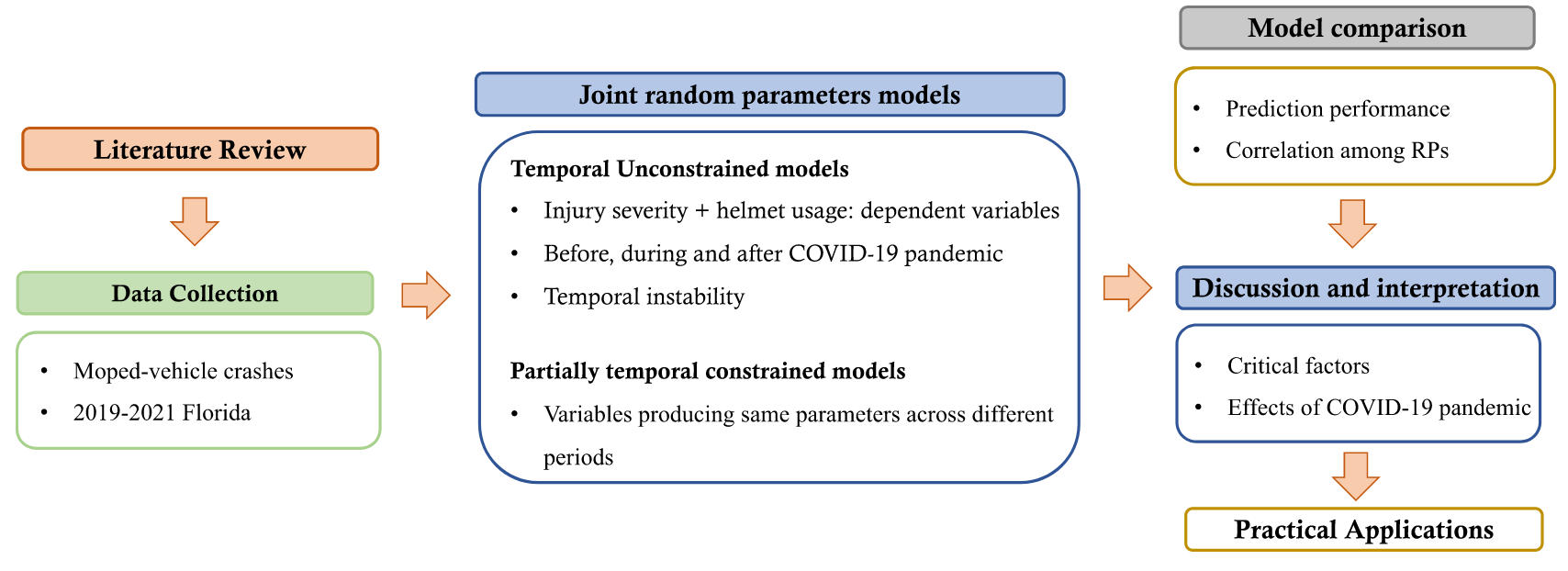
Effects of Helmet Usage on Moped Riders’ Injury Severity in Moped–Vehicle Crashes: Insights from Partially Temporal Constrained Random Parameters Bivariate Probit Models
Published in Accident Analysis & Prevention, 2024
Using joint random-parameters bivariate probit models and a partially temporal constrained framework, this paper quantifies how helmet use and crash/context factors jointly shape moped riders’ injury severity in Florida (2019–2021), and reveals COVID-19-related temporal instability in key effects.
</div>
<div class=”list__item” data-publication-year=”2025” data-publication-type=”journal” data-publication-title=”quantifying spatial inequities in traffic injury rates through the integration of urban road network measures and social vulnerability” data-publication-authors=”pengfei cui, mohamed abdel-aty, xiaobao yang*, chenzhu wang, yali yuan” data-publication-venue=”accident analysis & prevention”data-publication-method=”spatial statistics”data-publication-data=”nyc crash data”data-publication-objects=”crash frequency modeling; spatial modeling”>
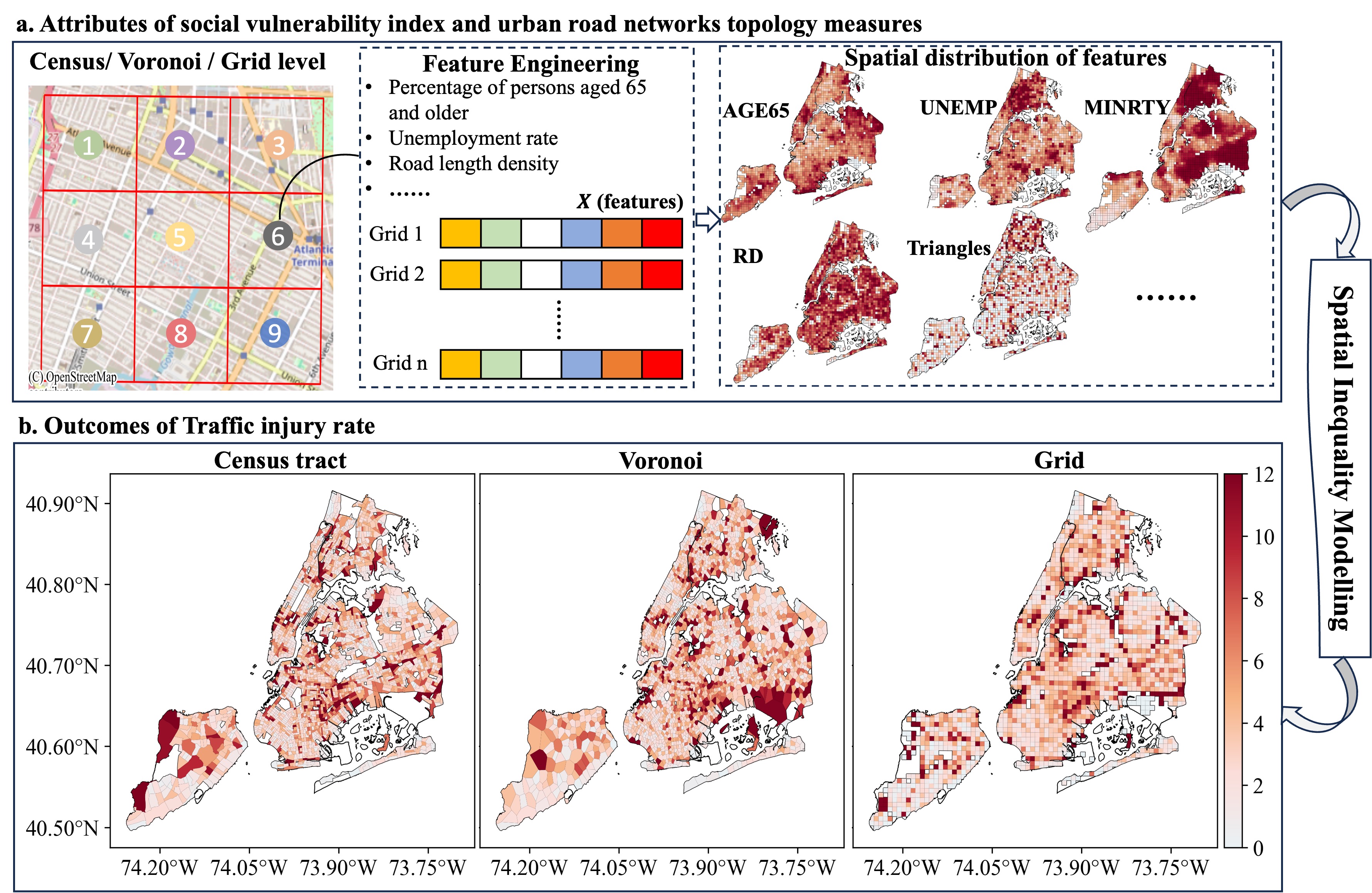
Quantifying Spatial Inequities in Traffic Injury Rates Through the Integration of Urban Road Network Measures and Social Vulnerability
Published in Accident Analysis & Prevention, 2025
This study utilizes spatial lag models and geographically weighted regression to quantify spatial inequities in traffic injury rates in New York City (2021-2023), integrating urban road network topology and social vulnerability indices.
</div>
<div class=”list__item” data-publication-year=”2025” data-publication-type=”journal” data-publication-title=”examining the impact of spatial inequality in socio-demographic and commute patterns on traffic crash rates: insights from interpretable machine learning and spatial statistical models” data-publication-authors=”pengfei cui, mohamed abdel-aty*, chenzhu wang, xiaobao yang, dongdong song” data-publication-venue=”transport policy”data-publication-method=”machine learning”data-publication-data=”florida crash data”data-publication-objects=”crash frequency modeling; spatial modeling”>
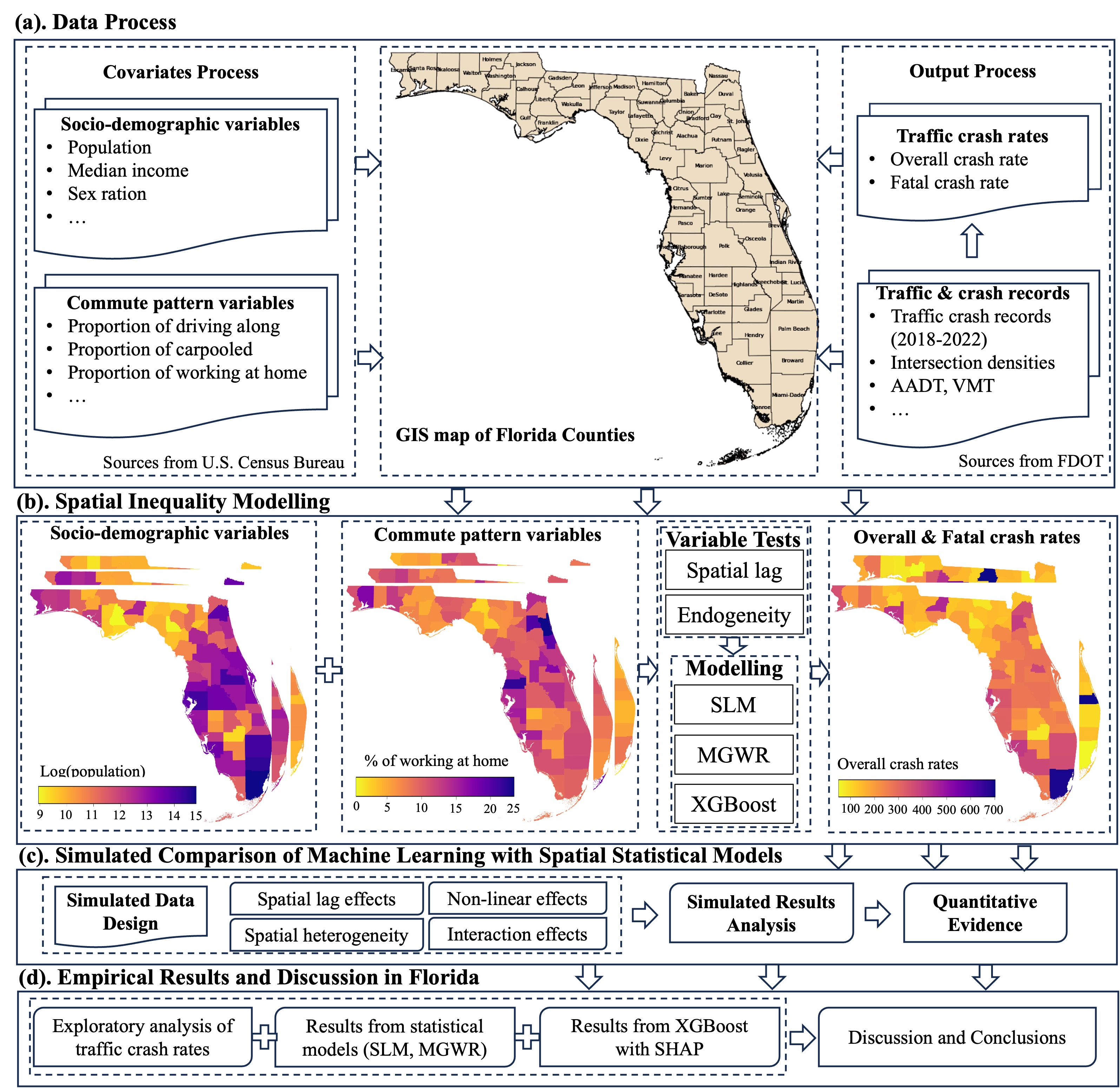
Examining the Impact of Spatial Inequality in Socio-Demographic and Commute Patterns on Traffic Crash Rates: Insights from Interpretable Machine Learning and Spatial Statistical Models
Published in Transport Policy, 2025
This study utilizes interpretable machine learning (XGBoost with SHAP) to unravel the non-linear effects of socio-demographic and commute patterns on spatial inequalities in overall and fatal traffic crash rates, demonstrating superior performance over traditional spatial statistical models.
</div>
<div class=”list__item” data-publication-year=”2025” data-publication-type=”journal” data-publication-title=”bivariate joint analysis of intercity travelers’ adaptive behaviors during adverse weather events” data-publication-authors=”yali yuan, xiaobao yang, dongdong song, xianfei yue, pengfei cui” data-publication-venue=”transportation research part a: policy and practice”data-publication-method=”statistics method”data-publication-data=”survey data”data-publication-objects=”travel behavior”>
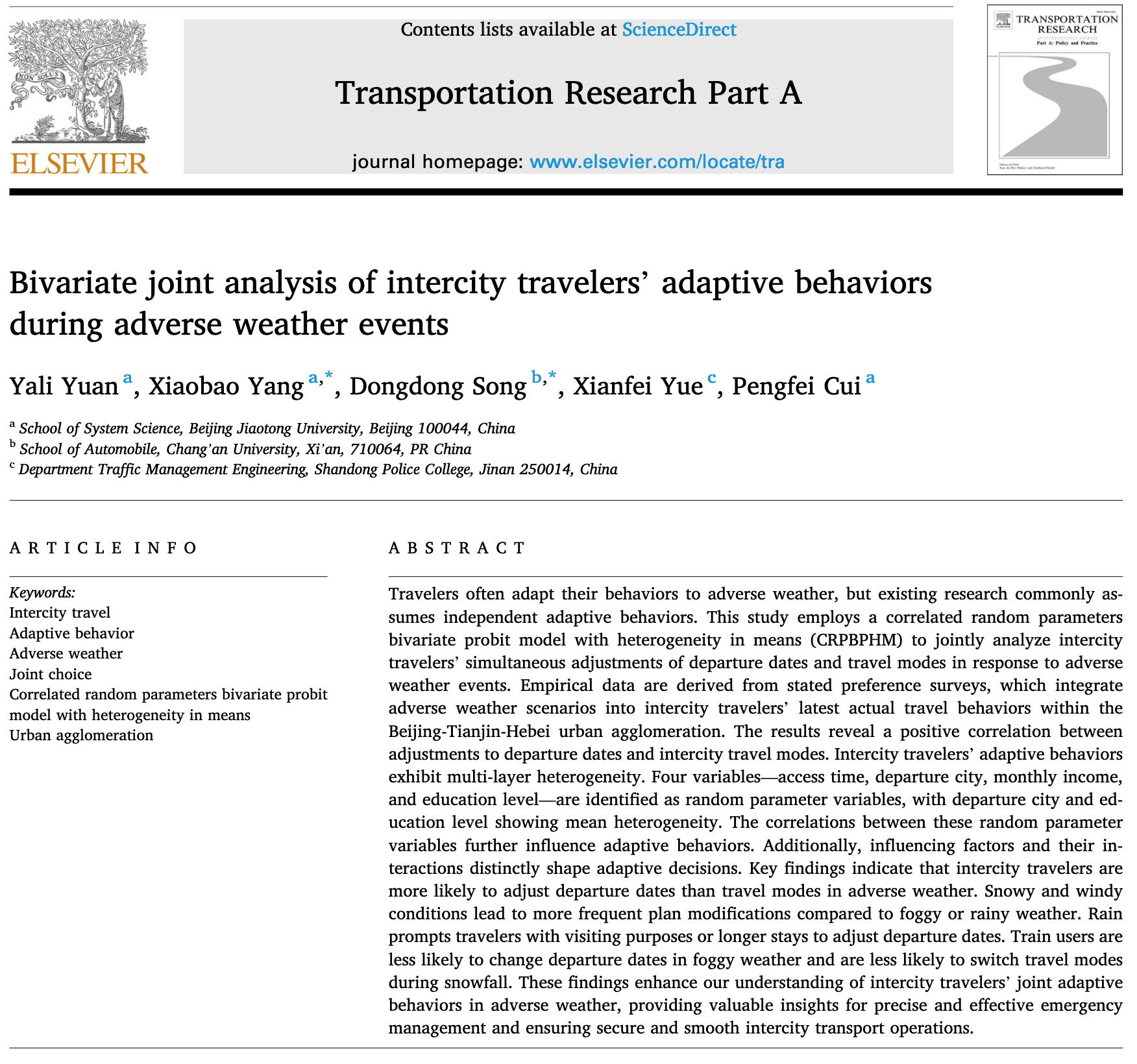
Bivariate Joint Analysis of Intercity Travelers’ Adaptive Behaviors During Adverse Weather Events
Published in Transportation Research Part A: Policy and Practice, 2025
This study jointly analyzes intercity travelers’ adjustments to departure dates and travel modes during adverse weather using a correlated random parameters bivariate probit model, revealing significant correlations and heterogeneity in adaptive behaviors.
</div>
<div class=”list__item” data-publication-year=”2025” data-publication-type=”journal” data-publication-title=”multiscale geographical random forest: a novel spatial ml approach for traffic safety modeling integrating street-view semantic visual features” data-publication-authors=”pengfei cui , mohamed abdel-aty, lei han*, xiaobao yang” data-publication-venue=”transportation research part c: emerging technologies”data-publication-method=”machine learning”data-publication-data=”florida crash data; streetview data”data-publication-objects=”crash frequency modeling; spatial modeling”>
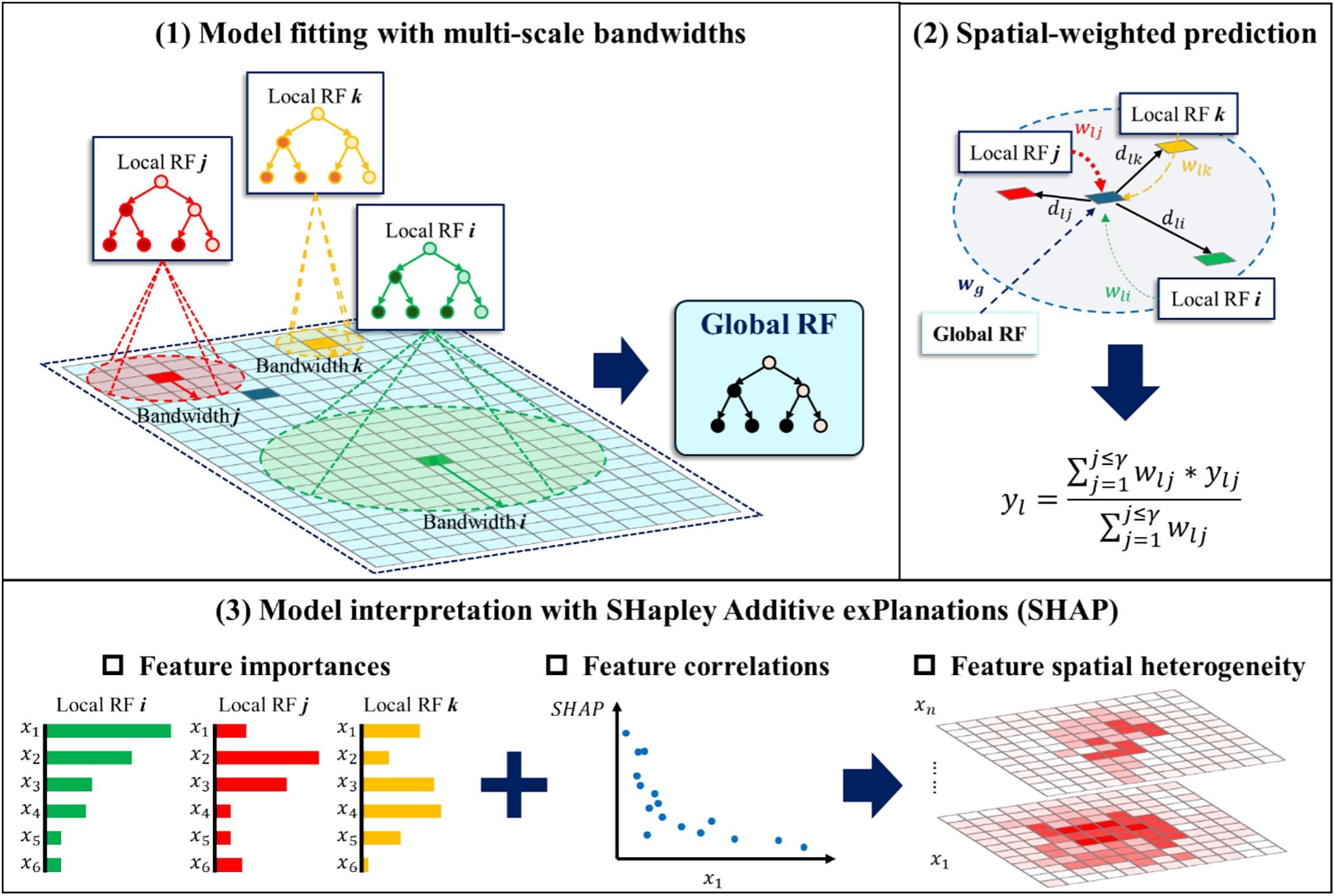
Multiscale Geographical Random Forest: A Novel Spatial ML Approach for Traffic Safety Modeling Integrating Street-View Semantic Visual Features
Published in Transportation Research Part C: Emerging Technologies, 2025
This study proposes a Multiscale Geographical Random Forest (MGRF) integrating street-view semantic visual features for traffic safety modeling by capturing multiscale spatial heterogeneity.
</div>
<div class=”list__item” data-publication-year=”2025” data-publication-type=”journal” data-publication-title=”spatiotemporal disparities in macro-microscopic properties of motorcycle injury level” data-publication-authors=”chenzhu wang, pengfei cui*, mohamed abdel-aty, said m. easa” data-publication-venue=”transportmetrica a: transport science”data-publication-method=”statistics method”data-publication-data=”florida crash data”data-publication-objects=”crash severity analysis”>
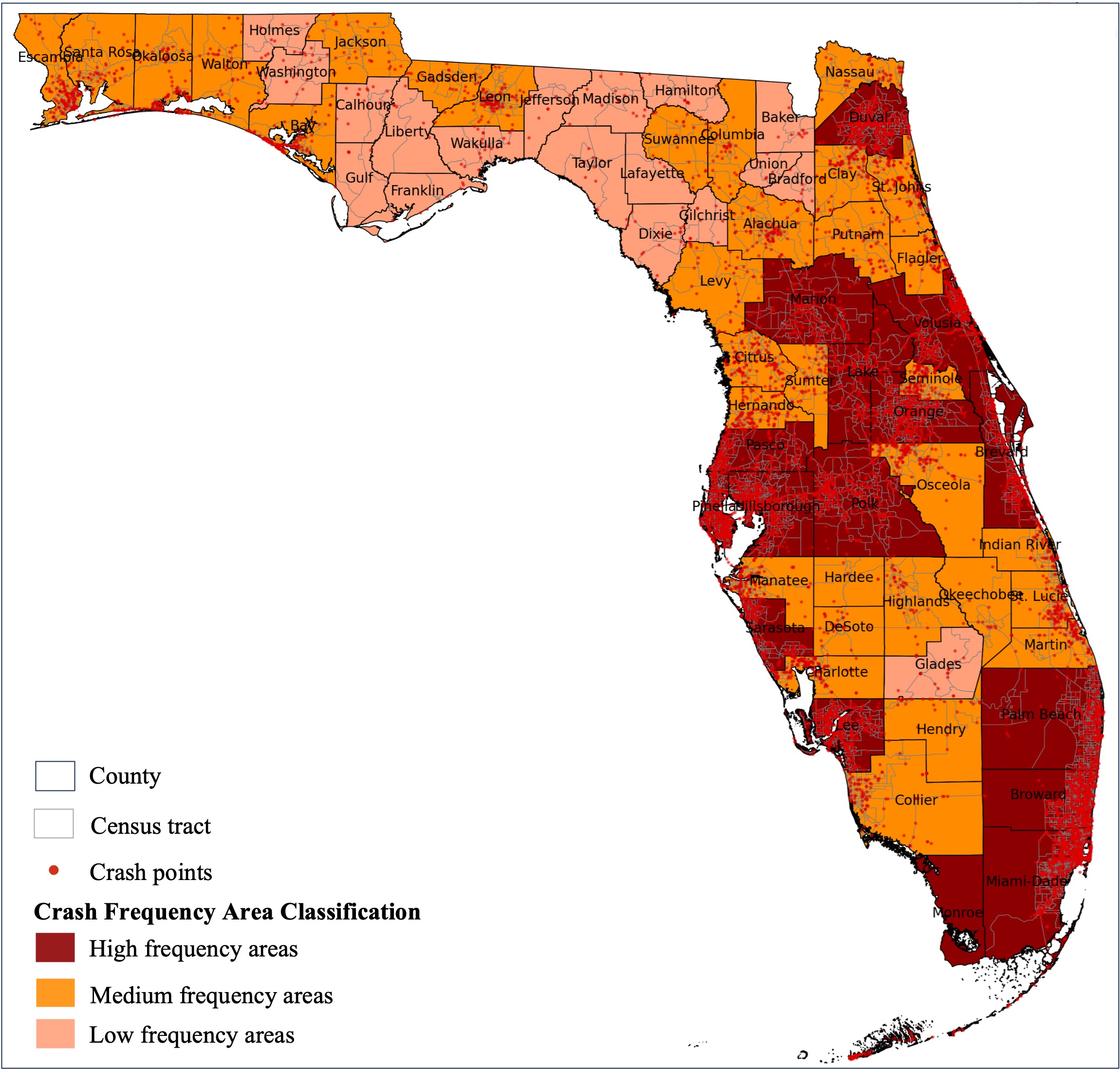
Spatiotemporal Disparities in Macro-Microscopic Properties of Motorcycle Injury Level
Published in Transportmetrica A: Transport Science, 2025
This study utilizes a partially temporally constrained random-parameters logit model to investigate spatiotemporal disparities in motorcycle injury severity in Florida (2020-2022), integrating macro-level socio-demographic factors with micro-level crash data.
</div>
<div class=”list__item” data-publication-year=”2026” data-publication-type=”journal” data-publication-title=”effects of autonomous vehicles on intercity public transport within urban agglomerations: exploring multi-layered heterogeneity and distance-based variations” data-publication-authors=”yali yuan, xiaobao yang*, sixuan li, pengfei cui, manli yuan” data-publication-venue=”technological forecasting & social change”data-publication-method=”statistics method”data-publication-data=”survey data”data-publication-objects=”travel behavior”>
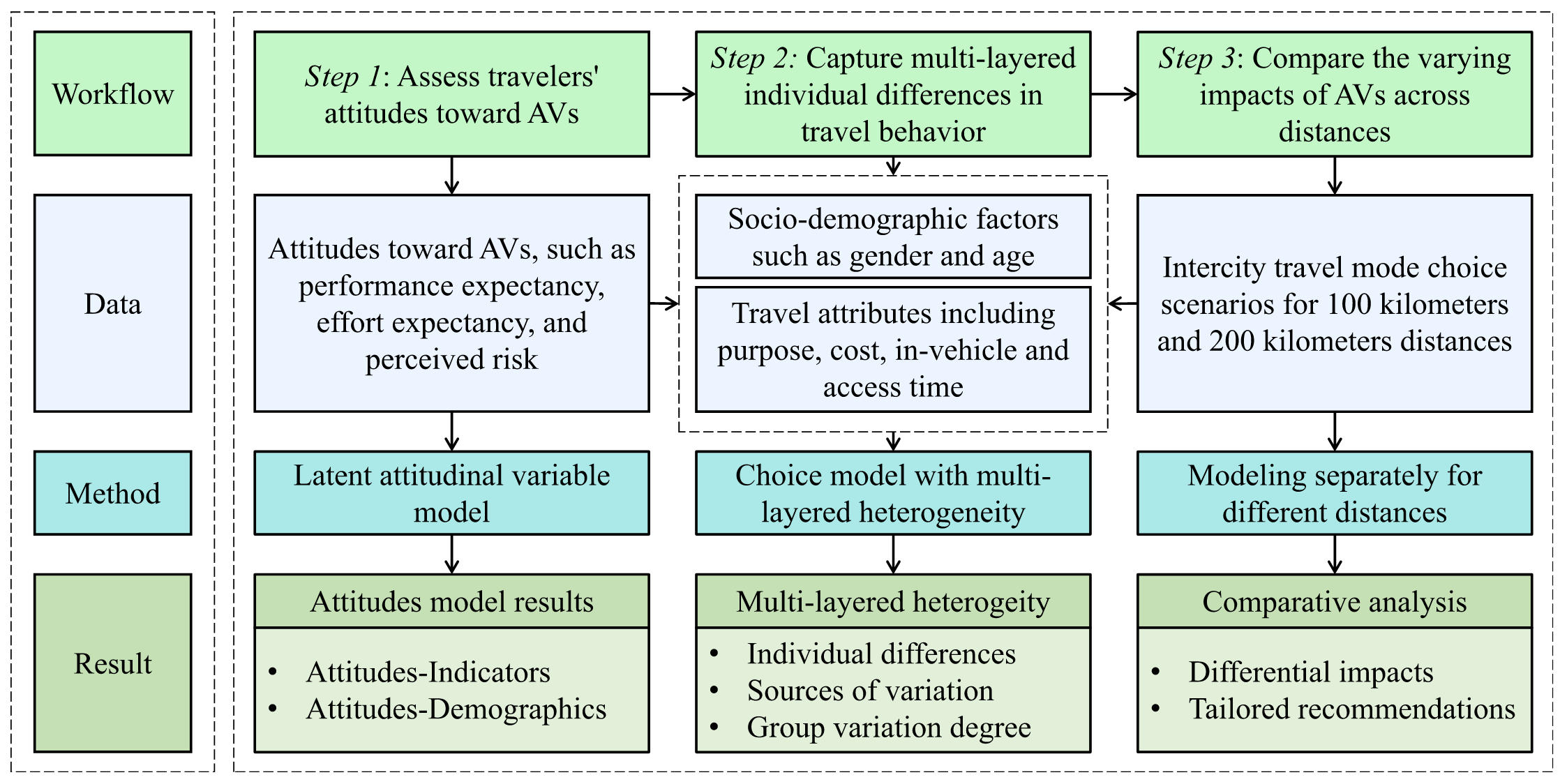
Effects of Autonomous Vehicles on Intercity Public Transport within Urban Agglomerations: Exploring Multi-Layered Heterogeneity and Distance-Based Variations
Published in Technological Forecasting & Social Change, 2026
This study investigates the impact of autonomous vehicles on intercity public transport mode choice within the Beijing-Tianjin-Hebei urban agglomeration using a hybrid random parameter logit model, revealing how multi-layered heterogeneity and travel distance influence traveler preferences.
</div>
<div class=”list__item” data-publication-year=”2026” data-publication-type=”journal” data-publication-title=”harnessing the integrated statistical machine learning for traffic crash injury-severity modeling” data-publication-authors=”pengfei cui, chenzhu wang, mohamed abdel-aty, xiaobao yang*, xingchen zhang, lishan sun” data-publication-venue=”reliability engineering & system safety”data-publication-method=”latent gaussian process with tree-boosting model (lgpboost)”data-publication-data=”florida motorcycle crash records (2014–2023)”data-publication-objects=”crash severity analysis”>
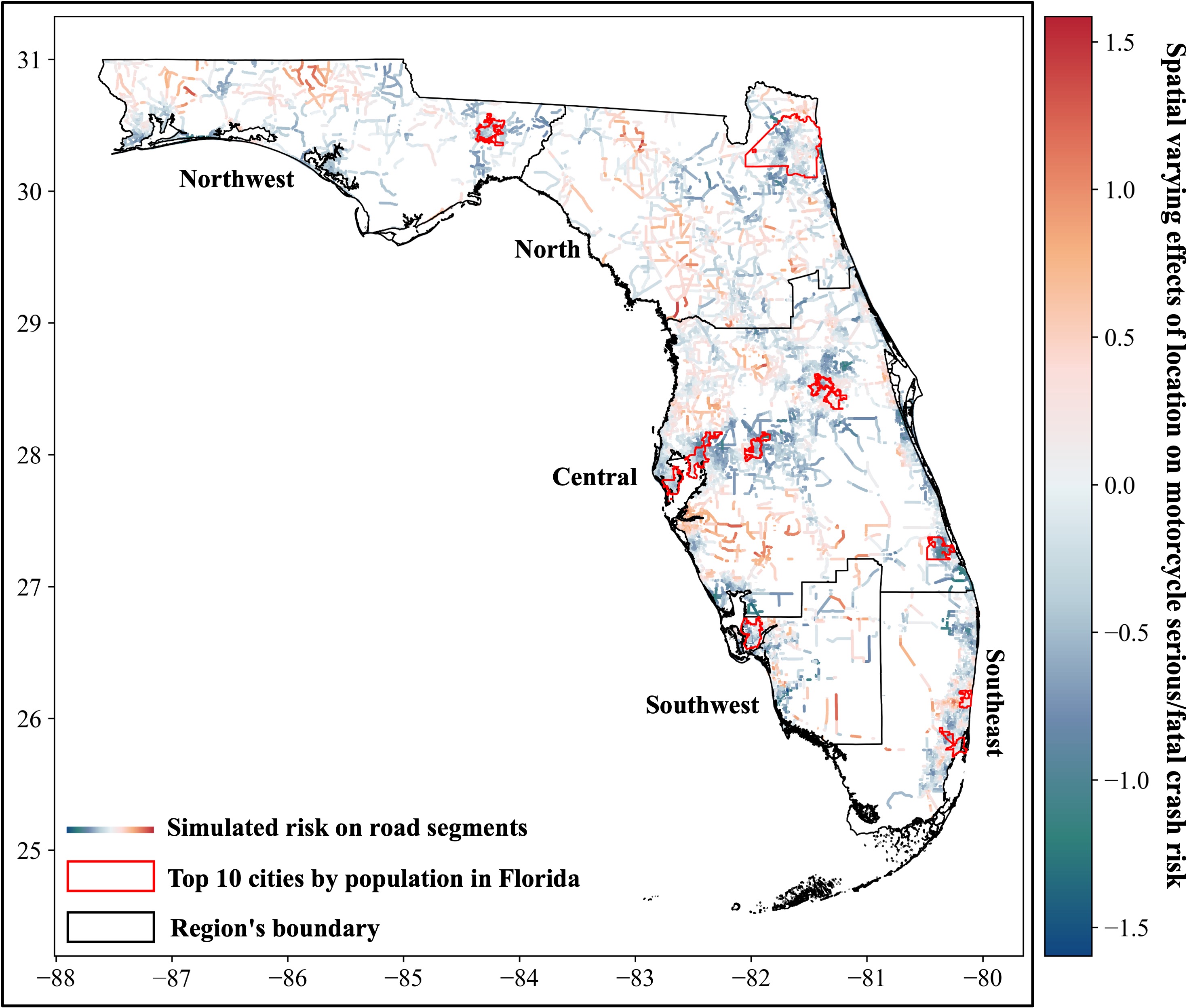
Harnessing the Integrated Statistical Machine Learning for Traffic Crash Injury-Severity Modeling
Published in Reliability Engineering & System Safety, 2026
Proposes LGPBoost, a unified STAT-ML framework that couples tree-boosting with GP mixed effects to jointly model nonlinear covariate effects and spatio-temporal (road-segment and annual) dependencies, validated via simulation and Florida motorcycle crashes (2014–2023).
</div>